(
Note: I share this interesting travelogue by Jodi Ettenberg, a Canadian blogger and writer, from her website.)
Posted on
April 11th, 2011
I spent close to a week in dusty Nyaungshwe, waking at dawn to make
the most of the rotating markets on the Lake. Staying the extra days
also meant that I had time for a hike or two in the surrounding Shan
foothills and the ability to get a welcoming wave from the night market
vendors who remembered my face and my obsession with their thick Shan
noodle soups, curries and delicious chapati.
At close to 120 square kilometers, the lake is enormous and the many
reed-lined marshes and canals that zigzag off the main waterway make it
seem even larger.
When you think of Inle Lake, you think of this:

and this:

and even this:

The awkward-seeming but very effective way of paddling the boats on
the lake have ensured that any mention of Inle is immediately followed
by questions about the fishermen. There is no question that it’s a
well-practiced talent; several of the tourists I met tried their hand
(well, foot) at paddling the boats and every single one fell into the
lake in the process. And there’s also no question that each of my photos
above still makes me smile. Those scenes are beautiful on their own –
but there is much more to the area than boats and fisherman.
For starters: the lake itself. On a clear day, it has hardly a ripple
and with the complicated maze of side canals and streams to navigate,
each lined with houses on stilts, decorated with flowers and colourful
laundry swinging in the breeze. Wide-eyed, I would glide through these
suspended villages, amazed at how meticulously the houses were kept up
and how every part of the house had a function. A small wooden outhouse
attached at the back allowed for privacy, a net spanning the poles
beneath the house served both as storage and a catch-all for stray
flipflops, small canoes etched out of a log were the primary means of
quick transport from floating house to floating house.
But with all these tiny details, the bigger picture never got tiresome. It was just stunning.

On one of my early days on the lake, my boat driver apologetically
asked if we (me and a few other tourists who went in on the cost of a
boat for the day) would mind stopping in at his village. He wanted to
introduce us to his family, and offer us some tea. Oh, and his best
friend was getting married – would we mind saying hello? Of course we
were overjoyed, and the wedding was an incredible opportunity to see a
lakeside village up close, and partake in one of their important
moments. Predictably, the wedding party was fairly surprised to see 3
foreigners join the festivities, but recovered quickly and within
minutes we were sitting down and eating pork soup and curry with the
guests. The room was divided into men and women, with the bride and
groom in the front of the room, separating the halves. As a foreign
woman, I was first invited to the women’s side of the room, where people
ooh’d and ah’d over the fact that I was wearing a
Burmese longyi, and then brought over to the men’s side for some whiskey and a
cheroot
cigar. Our time with the wedding party ended with a photo and some
hand-holding, followed by the entire wedding (including the bride and
groom) piling on the steps of the house to see us off.

* * *
A few days of rising early to catch the markets, and I was ready for
something new. My guesthouse mentioned a few hiking trails in the area,
and so a multinational hodge podge of travellers (we were from Canada,
Australia, the Netherlands and Switzerland) set out on bicycles for the
day. We not only got lost, but we got lost while hiking through the Shan
foothills, looping back toward the far side of the lake and dodging
burning brush, the fires heating us even more as we tiptoed by. We ended
up at a Wat built into a cave, which remains memorable for the
circuitous attempts to arrive and also because of this:

A cave Wat for tribeswomen in the middle of the Shan foothills, with
prayers led by a monk holding a cat. Following a delirious few hours of
getting lost in the mountains, this was an extremely memorable
afternoon.
* * *
But back to those markets. Far from being a tourist destination, they are a means for the
Pa-O
to get their supplies for the next few days. Running on a 5-day
schedule, the markets rotate their way around the lake, allowing for
each hilltribe to descend toward the water’s edge for their shopping.
With bright towels on their heads and colourful woven bags, the Pa-O
were different than the other tribes in Burma, dressed in black pants
and tops and all wearing khaki canvas lace up shoes.

Boats full of Pa-O would motor up to the market each morning, parking
in a chaotic inkblot of wood and paddles, requiring anyone arriving
later to jump through all the boats to reach land. Getting in and out of
the markets was itself a feat; lots of good-natured yelling and
laughing and maneuvering to set the boats free. I vividly remember
tipping over into a boat of Pa-O as I precariously made my way to the
market, my longyi puddling around me with all the tribeswomen laughing
and holding it up so it did not fall off.

The markets themselves were a feast for the eyes, bright spices
lining the ground leading into the main market area, piles of fresh
samosas and coconut sweets and rows upon rows of freshly caught fish for
sale. I wandered aimlessly for hours, taking photos, getting new foods
thrust into my hands by smiling vendors and watching the inimitable
movement of the market as it wound down for the day.

Every market also had its flower section, with bundles of flowers
perfectly laid out on towels or blankets. Almost every single person at
the market left with their food and with bright flowers under their arm
and the houses on the lake and those in Nyaungshwe were all decorated
with fresh sprigs, no matter the day. Given the cost of one bundle (10
cents), I took to buying several and giving them to each hotel on the
day that I left town. The friendliness of every one of their staff, no
matter the city, meant that it was a fun way to show my appreciation as I
moved on. I would get my share of big smiles in the markets, too,
walking around with my own bundle of purple, white and pink.

And the markets in the farther reaches of the lake were inevitably
untouristed and the source of some fun, quirky encounters. I remember
having to pee and making the universal “holy crap I have to pee” move
(leg crossed over other leg, panicked look on face), and being taken by
the hand by one of the older women at the market to the edge of the
forest. She pointed me to a crude outhouse that charged several kyat for
access. Looking into the woods, I saw several Burmese women squatting
there, free of charge. So of course I did the same, which had the
bathroom attendant in a deep frown and the Burmese ladies waiting for
their turn doubled over with laughter. My escort, waiting for my return,
flashed me a huge smile and took my hand once more, returning me to
where I was before.
* * *
Along the lake, several larger wooden buildings on stilts housed
weaving mills, with bright spools of reds and blues lining the walls and
floors. While silk weaving is present throughout several areas of
Burma, Inle is also known for its lotus weaving, meticulously spun using
the long stems of the lotus plant. Time consuming and work-intensive,
the stems are pulled apart to expose their silken filaments and rolled
into thicker and thicker threads. An unimaginable amount of time and
effort is required to build a full spool, let alone weave it into a
garment.

We wandered through the weaving houses, several generations of
weavers working as we went. Slowly whittling the fibers into thread and
carefully cutting through the lotus stems to separate them out for use.


and in addition to the generations above, a future lotus weaver, who
had never seen her face reflected on a camera’s screen before:

* * *
Outside the old teak Nga Phe Kyaung monestary was this beautiful,
proud girl selling bracelets, her smiling face covered in intricate
sandlewood thanaka. I asked to take a picture and immediately she
stopped smiling to pose. I love how – at a first glance – this photo
leads you to believe that she was standoffish, unfriendly or melancholy
but seconds before (and just after) she erupted into bubbling laughter.
This
was Burma, too – first glances melting away to yield so much more
underneath, a complicated country that cannot be whittled down to one
set of words.

Where to stay and eat in Burma’s Inle Lake:
For
lodging, I can’t recommend
Mingalar Inn
enough. Perfectly kept, bright rooms with teak wood floors, a welcome
lemon juice every time you return to the Inn at the end of the day and
the price ($7/night for a single; $12-18 for a double depending on size,
each with private bath) includes a huge breakfast of banana pancakes,
eggs and more. Run by a lovely family, who write me still to ask if any
more birds have taken a crap on my head. (They were talking to me during
birdcrap #7). For reservations, email mingalarinn-at-gmail.com or call 081/209198, and tell them the birdcrap woman from Canada sent you.
For
food,
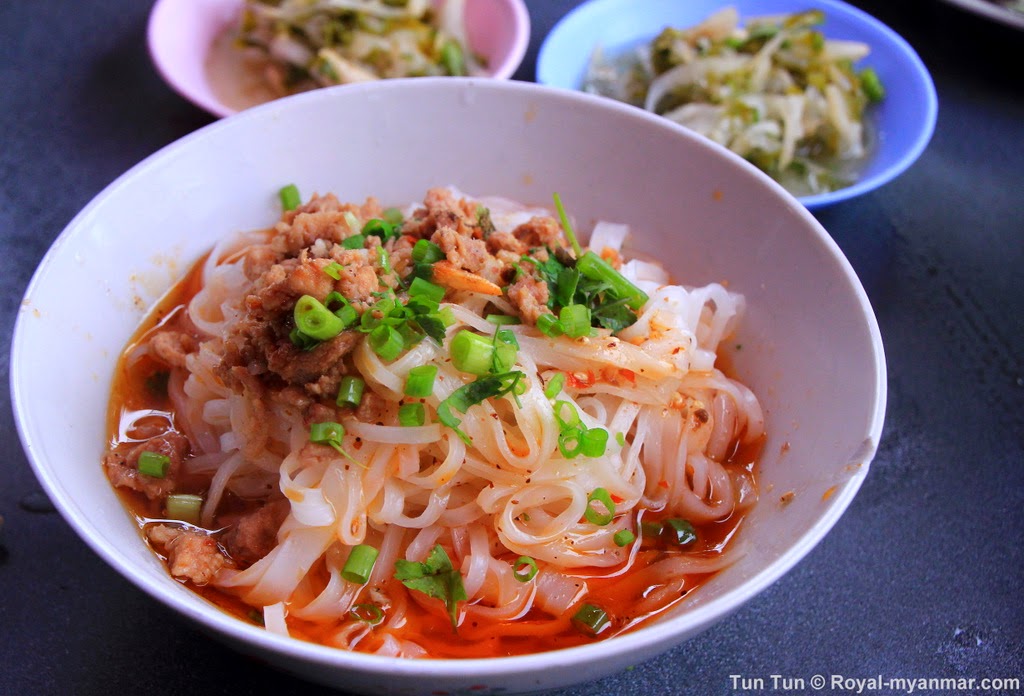
the best places to try just about anything are the morning markets.
When the cycle has the market elsewhere, Nyangshwe’s Mingalar Market
morning stalls still serve up delicious Shan noodle soups and tofu
salads. At night, a small
night market sets up on the
main drag in the tiny town, with grilled whole fish stuffed with
cilantro and chilis ($1) and a chapati stand serving great curries and
huge, fluffy chapati (50 cents) at rickety plastic tables. If you’re
looking for more ambiance and some Western food,
Star Flower Restaurant (near
the post office on Phaung Daw Pyan Road) makes its own home made pasta
and has a garden full of fresh basil, used liberally in their sauces. I
had the roasted eggplant with basil pasta, and it was incredible.
They’ve also got wood-fired pizza. More expensive than your usual fare
($3-4 for a (huge) plate).
-Jodi
This article is from http://www.legalnomads.com.